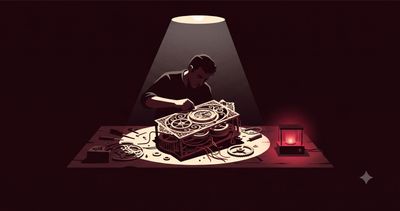
Over-investing in the perfect version is what stops you shipping the real one, and seniority makes it worse, not better. Two proofs: a 200€ smart home that just works, and a tiny feature that sat parked for months, then became the most-liked thing on the team an hour after I finally shipped it.
I always wanted a smart home. That was never the problem. The problem is that every time I open Amazon, I sort by price, high to low. I want to see the Sonys and the Samsungs, the top of the line, never the Xiaomis. I find a 2000€ smart TV, admire it for a second, then close the tab and buy nothing at all. I have written about this instinct before: the reach for the badge over the engine.
It did not help that I split my life between Frankfurt and Jeddah. Jeddah is home, with my wife, who is an architect, which makes the space hers by design, literally. Bolting a 20€ Chinese smart bulb onto her carefully composed walls is not a fight I would survive. Frankfurt was mine, but only ever half my life, and a 3000€ Apple or Google ecosystem is a hard sell for a part-time home. So the smart home stayed a someday thing. For years.
The 200€ Smart Home
Then my old LG TV got so laggy I finally gave up. This time I did not sort by price. I just bought the thing that was on sale: a 65-inch Xiaomi for 350€. Somewhere in that checkout flow, something flipped.
The TV was supposed to be the end of it. It wasn't. I saw a set of Govee smart lights for 20€ and thought, why not. Then an Alexa. Then a little Govee light bar that reacts to whatever is on the screen. Then I noticed my dryer was already smart and I had never bothered to connect it. Then the portable Klarstein AC, also smart, also ignored. One by one, I plugged them into each other. Outside the TV, the whole thing cost me maybe 200€. A nice dinner.
Now I say "Alexa, movie time" and the workstation shuts down, the TV wakes up on Netflix, and the lights dim on their own. Is it the best smart home in the world? Not even close. There is no unified app, no perfect scene engine, no designer ecosystem. But it works. It made my life genuinely easier. And it cost me the price of a meal instead of the price of a commitment.
Here is the part I keep coming back to. For years the reason I never started was the price of doing it properly. The premium ecosystem needs a business case. It needs you to be sure. 200€ of cheap gadgets needs nothing. There is a threshold where the math quietly inverts, and the expensive, correct, all-in version becomes the very thing standing between you and ever starting at all.
I Am Worse At This At Work
I do this for a living, and I am worse at it in the office than I am in my own living room.
I am on a senior team. Three staff engineers, one senior, one mid. Between us we have seen enough to know exactly how a thing should be built. And that is the problem. We wanted to ship things that were flawless. So we refined. We ran the idea through another round. We added the edge case, then the edge case of the edge case. We had opinions. Good ones, valid ones, the kind you cannot easily argue against. And every one of them added a week. Meanwhile the people we were building for did not want flawless. They wanted something. Anything. That worked.
🛠️ The Senior's Trap
A junior ships the ugly version because they cannot yet see everything wrong with it. A senior sees every flaw, and has the skill to chase each one down. Seniority is not the cure for over-engineering. It is the accelerant.
Recently I shipped a feature that had been sitting in our backlog for three or four months. Nothing glamorous: letting users set cleanup rules on their storage buckets per tag, instead of only on the whole bucket. Useful, boring, and low enough on the list that nobody had picked it up. Too small to justify a proper project, too dull to be exciting. That word, proper, is the tell. On a team like ours, a feature either earns the full treatment, the ADR, the edge cases, the review of the review, or it earns nothing at all. The flawless bar does not only gold-plate the big things. It starves the small ones.
That day, I had a headache and wanted something simple. So I grabbed it. An hour later it was live. I hesitated before announcing it, because two lines in Teams felt like too much ceremony for something this small. But that is what we do for features, so I posted it anyway. It is now the most-liked message in the channel, and people are already working out how much money it will save them. Three months of nobody. One hour of somebody. Instant applause, for the smallest thing on the list.
The Cathedral In Your Head
The cheap smart home and the tiny shipped feature are the same story. In both, the thing standing in the way was never the work. It was the imagined perfect version of the work. The full ecosystem. The flawless feature. The cathedral I could picture so clearly that I never laid a single brick.
The more senior you get, the better you get at building that cathedral in your head. You see the whole thing, every arch, and every flaw in every arch. What you slowly lose is the junior's gift for putting down one ugly brick and seeing if anyone wants to stand on it.
Nobody asked for flawless. They asked for something that works. Ship that. You can always refine the thing that exists. Especially in our field. You can roll back. You can iterate. You can ship again an hour later. It is not brain surgery. My old engineering manager used to say it in the flattest Australian accent you can imagine: "We sell mattresses, for fuck's sake." Nobody dies because version one shipped simple. Could the one-hour version have bugs? Of course. So could the version with three more rounds of review. The only version that is guaranteed safe is the one that never ships, and that one also saves nobody any money. You cannot refine the thing you never started.
Here is the thing about real cathedrals: they are history's best argument against waiting. Centuries of scaffolding, half-finished naves, builders who died before the roof went on. They got built anyway, one ugly brick at a time. They are still standing. The only cathedral that never gets built is the flawless one in your head.
Subscribe to Life in Production
New essays on engineering, career, and life. No spam, unsubscribe anytime.